the cultural starter kit
The Palantir reading list: 5 books new hires get
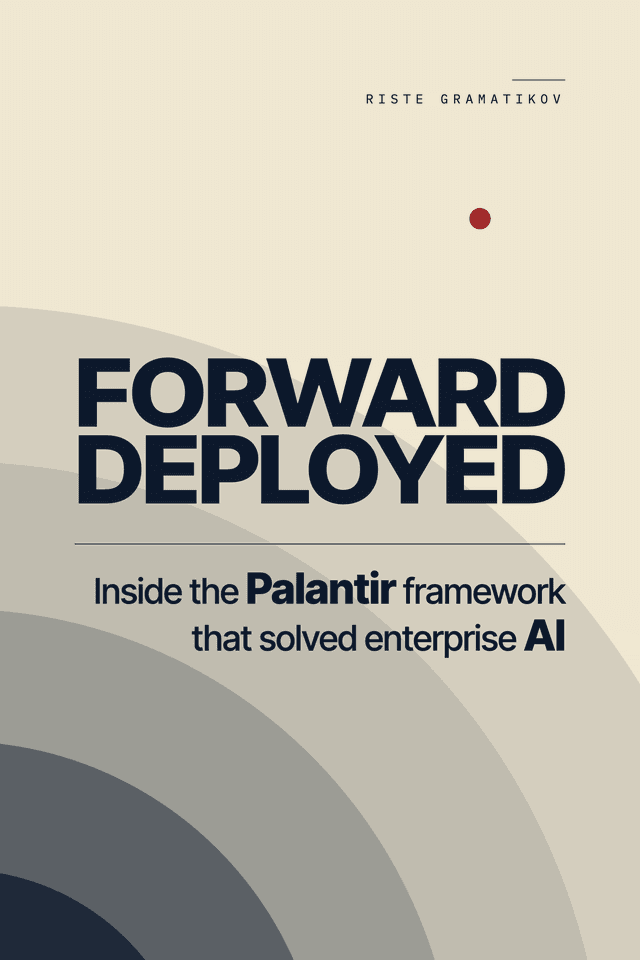
Most corporate reading lists are a shelf of bestsellers assembled to signal that the company reads. Palantir's is five books, and the interesting thing about it is the selection logic: each one is aimed at a specific way forward deployed work fails. Chapter 4 of Forward Deployed calls it anti-mimetic inoculation rather than professional development, and the distinction holds up — you can name the failure mode each book exists to prevent.
Notice what is absent. There is no book about Palantir's products, no leadership title, and only one book that touches software directly. A new engineer gets a productivity manual, a work of investigative journalism about 9/11, and a 1979 text on improvisational theatre. That composition is the argument: the hard parts of the job are reading a room, holding an unbounded workload, and finding the real problem — not learning the platform, which happens on deployment anyway.
- 01
Interviewing Users: How to Uncover Compelling Insights
Steve Portigal · Rosenfeld Media, 2nd edition 2023
Inoculates against
Taking requirements at face valueThis is the methodology book behind the Deployment Strategist role. Discovery at a customer site is field research, not requirements gathering, and Portigal treats interviewing as a craft with technique rather than a conversation anyone can wing.
The core move is asking about what someone already does instead of what they want. A plant manager can describe their workaround in detail and still have no idea what software should replace it. The first answer is data; the second is speculation.
- 02
The Looming Tower: Al-Qaeda and the Road to 9/11
Lawrence Wright · Knopf, 2006
Inoculates against
Treating data integration as a plumbing problemWright's account of the run-up to 9/11 is, among other things, the most detailed case study of an information-sharing failure ever written. Analysts held pieces of the same picture and could not put them together across organizational boundaries.
This is the book that explains why Palantir exists, and it does the explaining without mentioning Palantir. Read it and the founding mission stops being a slogan: the fragmented systems you are asked to connect are the same category of problem, and the stakes are the argument for why the work is worth doing at all.
- 03
Getting Things Done: The Art of Stress-Free Productivity
David Allen · Penguin, revised edition 2015
Inoculates against
Drowning in a job with no boundariesThe least glamorous entry on the list and the most immediately practical. Forward deployed work has no natural edges — everything is urgent, nothing is scoped, and you are the only person tracking the commitments you made in a customer meeting three weeks ago.
Allen's system is a way to hold that load outside your head so attention goes to judgment instead of remembering. Given that autonomy from day one is the whole design of the role, someone has to supply the structure, and the answer here is that you do.
- 04
Principles: Life and Work
Ray Dalio · Simon & Schuster, 2017
Inoculates against
Deferring to whoever has the most seniority in the roomDalio's idea meritocracy — the best idea wins regardless of who proposed it — is the closest published description of what a flat structure is supposed to feel like from the inside, along with the radical transparency needed to make it survive contact with human ego.
It is on the list as inoculation against status games. In an organization where influence is meant to come from accomplishment rather than title, you have to be able to disagree with a senior person in public and treat being wrong as cheap. Most people arrive having been trained to do the opposite.
- 05
Impro: Improvisation and the Theatre
Keith Johnstone · Faber & Faber, 1979
Inoculates against
Mistaking political resistance for technical objectionsThe unexpected one: a theatre director writing about training actors to perform without a script, with no reference to software anywhere in it. It has been on Palantir's list for years, and it earns the place.
Johnstone's insight is mechanical. Every interaction involves unconscious status transactions — one person raising, the other lowering — and almost nobody notices they are doing it. Learn to see them and deployment resistance becomes legible: when a manager attacks your data model, the threat is usually to their authority or expertise, not to the schema.
The other two ideas that transfer directly are blocking versus accepting an offer, and reincorporation — a concern raised in week two returning in week six as evidence it was heard. Because it comes from improv, these are practised as games until they are reflexes, rather than principles you try to recall while someone is annoyed with you.
Why a book list is part of the talent system at all
Palantir gives people real ownership from day one — the company's own blog shows an engineer in his first month demoing Hurricane Sandy relief work to Bill Clinton. Autonomy that early only works if people arrive with judgment rather than instructions, and judgment cannot be transferred in an onboarding deck.
The books do two things a deck cannot. They install a shared vocabulary, so a deployer in one country can say “that was a status move” or “we never reincorporated their objection” and be understood immediately by someone they have never worked with. And they supply frameworks in advance of the situations that need them, which matters because the situations arrive without warning, inside somebody else's organization, with no time to look anything up.
If you are doing forward deployed work now rather than joining Palantir, the FDE books and resources list covers what is worth reading today, including the primary sources behind this page.
The reasoning behind each of these books — and the talent management strategy they belong to, the organizational design and communication that carries it, the anti-mimetic principles underneath all of it, and the technical architecture it produced — is covered in Forward Deployed.